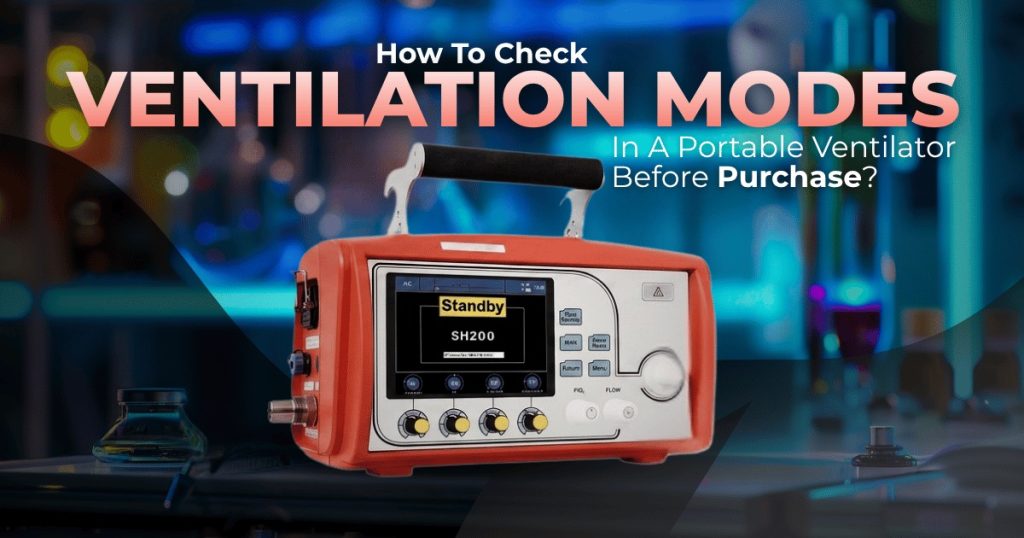
A portable ventilator is not just a device, it is a very important and essential piece of technology that saves lives. As it is used for emergency health aid, in-home support, clinical use, etc., knowing how to evaluate the ventilation modes is necessary before making a purchase. Many well-established healthcare facilities depend on recognised surgical instruments suppliers in Dubai to access high-quality equipment, including ventilators. To have one that will truly meet its intended use, knowing what to look for is helpful.
Importance Of Ventilation Modes
Ventilation modes are used to decide how the ventilator supports and controls the breathing of a patient. When the right mode is selected, it’ll make the patient feel more at ease, provide proper oxygen delivery, and reduce the chances of complications. Portable ventilators have various modes, but not all of them are equally useful in different situations. Being educated about these modes helps to improve the equipment compatibility with different types of patient conditions, from acute respiratory diseases to long-term breathing support.
Main Ventilation Modes
Volume-Controlled Ventilation (VCV)
As the name suggests, this mode is used to set a fixed volume of air for each breath. It is particularly useful when there is a need for precise control instead of total volume. When evaluating VCV, check if the ventilator holds the set volume properly, even when there are changes in the airway resistance.
Pressure-Controlled Ventilation (PCV)
In this mode, the ventilator will continue to deliver air until it reaches a preset pressure. This is done to eliminate any lung injury that can be caused by excessive pressure. A good portable ventilator will make it easy to adjust the levels and deliver stable performance even when the patient is moving.
Assist-Control (A/C) Mode
This mode allows to combine the patient’s initiated breath with the mandatory ones. This is for patients who can breathe on their own but still need a bit of support. In this mode, check for responsiveness. See how fast the ventilator detects and adjusts itself to the patient’s breathing pattern.
Synchronized Intermittent Mandatory Ventilation (SIMV)
SIMV is a mix of mandatory and voluntary breaths synchronised with the natural breathing pattern of the patient. When evaluating this mode, make sure that the sync is perfect and is not causing any discomfort to the patient due to breathing mismatches.
Continuous Positive Airway Pressure (CPAP) and BiPAP
These modes are commonly used for patients who can breathe on their own but need airway assistance. CPAP provides constant airway pressure, while BiPAP delivers different levels of pressure for inhalation and exhalation. Remember to check the comfort settings and accuracy of the pressure.
Factors to Assess in Ventilation Modes
How easily can the modes be switched?
A proper ventilator will make it easy and allow fast switching between modes. In emergency care, even the smallest delays can lead to great consequences. Check for intuitive control and a simple interface.
Is it accurate and consistent in performance?
It is important for the equipment to have consistency in providing the set values such as pressure, volume of air, and respiratory rate. Even the slightest change can affect the health of the patient. High-quality equipment will deliver this by maintaining it all under different situations.
Is it syncing properly with the patient?
Patient synchronisation is one of the most important factors that contribute to the patient outcome. Improper synchronisations will cause the patient discomfort, fatigue, and more health issues. Advanced ventilators are equipped with sensitive triggers that will detect the patient’s breathing effort accurately.
Does it have alarms and other safety features?
High-performance alarms are a necessity. It brings attention to issues such as high pressure, reduced volume, or disconnection. Properly evaluate if it’s clear and has a fast response.
Can it adapt to different patient needs?
The portable ventilator is used for adults as well as children and babies. The ventilator modes must be adjustable in order to support different lung capacities and respiratory requirements.
How much can its battery handle?
All modes should be accessible even when the ventilator is on battery power. Analyse how long the device can work without any impact on performance.
Some Tests To Be Done
- Speed of mode transition
- Response time
- Adaptability
- Noise during operation
- Clarity of display
- Ease of use
Making An Informed Purchase
To evaluate the ventilation modes in a portable ventilator, both technical knowledge and practical understanding are needed. Give importance to consistency, performance, interface, and adaptability. The right equipment will improve outcomes and be dependable during emergency situations. To have a well-chosen device, work with experienced surgical instruments suppliers in Dubai.