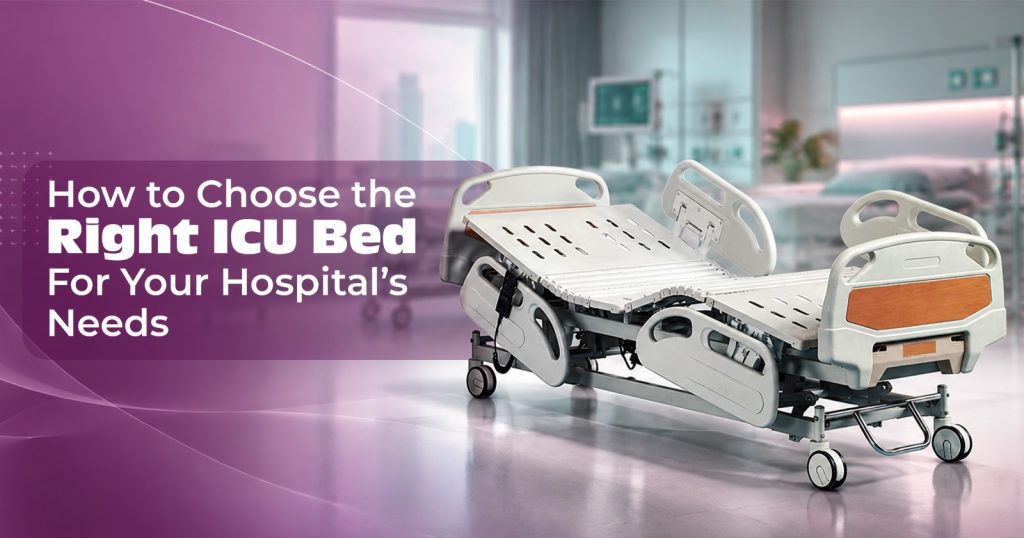
What should hospitals look for when selecting an ICU bed for their critical-care environment? The right bed should support patient positioning, staff access, safety, mobility, and compatibility with essential ICU equipment. Recognized as a hospital equipment supplier in Dubai, Medicare provides ICU solutions designed to support the demanding requirements of modern critical-care settings. With different ICU bed models and configurations available, hospitals should consider their clinical requirements, available space, patient needs, and long-term operational priorities before making a purchase. A well-selected ICU bed can help healthcare professionals provide efficient care while creating a more practical environment for patients and staff.
Start With Your ICU’s Clinical Requirements
Every intensive care unit has different patient profiles and operational requirements. The first step is to identify how the bed will be used and what capabilities are most important for the clinical team. Understanding these requirements helps narrow down the available options and prevents hospitals from paying for features that may not be necessary.
- Type of patients typically admitted
- Required patient positioning
- Frequency of patient transfers
- Level of monitoring required
- Number of staff using the bed
- Available ICU room space
Look for Essential Patient Positioning Features
Patient positioning is one of the most important considerations when selecting an ICU bed. Critically ill patients may require frequent adjustments to support treatment, comfort, respiratory care, and nursing procedures.
Features such as adjustable backrests, knee positioning, height adjustment, and Trendelenburg or reverse Trendelenburg positioning can provide greater flexibility for clinical teams. Electric controls can also make adjustments easier while reducing physical effort for healthcare professionals. The bed should provide smooth and controlled positioning while maintaining patient stability throughout adjustments.
Prioritize Safety and Infection Control
Safety should remain a primary consideration when purchasing an ICU bed. A suitable model should support secure patient positioning and make it easier for staff to provide care safely.
- Secure side rails
- Efficient locking castors
- Stable bed construction
- Emergency positioning functions
- Easy-to-access controls
- Suitable patient weight capacity
- Smooth and secure height adjustment
Consider Mobility and Equipment Integration
ICU beds often need to accommodate monitors, infusion pumps, ventilators, oxygen equipment, and other medical devices. A bed with suitable accessories points and equipment compatibility can help healthcare teams organize essential equipment around the patient. Mobility is another important factor. Strong castors and effective braking systems can help staff move patients and equipment when necessary. However, the bed should remain stable and secure when stationary.
Evaluate Comfort and Ergonomics
Patient comfort remains important even in intensive care. Adjustable positioning can help support comfort while allowing clinicians to access patients more easily. Ergonomic design also benefits healthcare professionals by providing appropriate working heights and easier access during procedures, transfers, and routine care. This can help reduce unnecessary physical strain during daily ICU operations.
Check Durability, Maintenance, and Support
An ICU bed is a long-term investment, and hospitals should evaluate more than the initial purchase price. Durable construction, quality electrical components, accessible replacement parts, and straightforward maintenance can influence the total cost of ownership.
Before purchasing, ask about:
- Warranty coverage
- Preventive maintenance requirements
- Availability of spare parts
- Technical support
- Service response times
- Cleaning and maintenance procedures
- Expected operating life
Choose an ICU Bed That Fits Your Hospital’s Requirements
Selecting an ICU bed requires more than comparing prices and specifications; it needs hospitals to consider patient safety, clinical functionality, staff ergonomics, durability, and everyday usability. The ideal model should match the ICU’s patient requirements while supporting smooth positioning, mobility, monitoring, and access to medical equipment. Working with an experienced hospital equipment supplier in Dubai can help healthcare facilities evaluate available options and identify a bed suited to their clinical environment. Comparing features, maintenance requirements, warranty coverage, and long-term value can also support a more informed purchasing decision. Ultimately, the right ICU bed should provide quality performance while contributing to safer patient care and more efficient critical-care workflows.