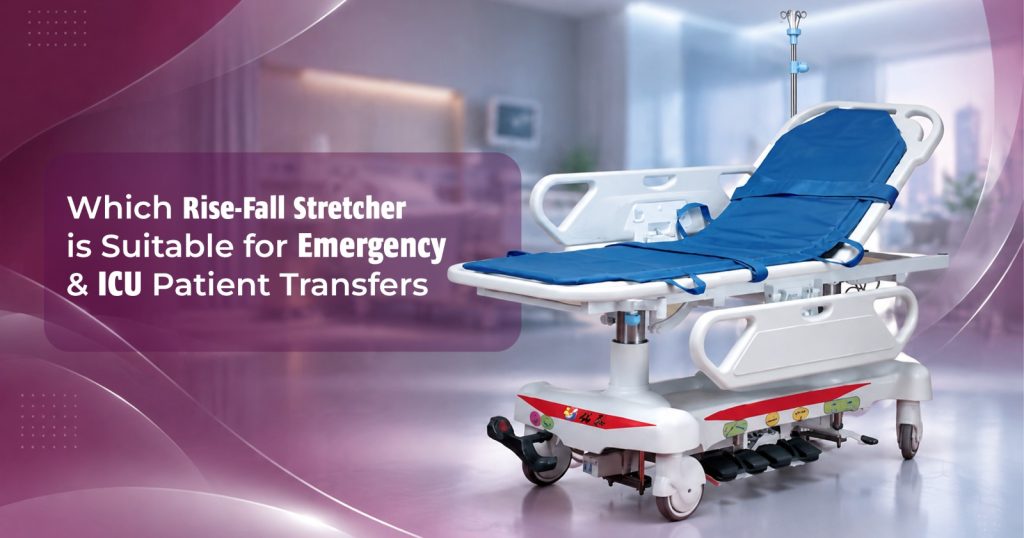
Transferring patients needs equipment that can support safety, comfort, and efficiency in movement. In parts of hospitals like emergency departments and intensive care units, a dependable rise-fall stretcher will be of great help to healthcare professionals to transport patients between different areas while providing proper support and positioning. It’s important to select the most suitable model with careful consideration of the facility’s needs, requirements of the patients, and daily workload. Work with a reputable hospital equipment supplier in Dubai to help healthcare facilities to identify the best option for that environment.
Consider the Type of Patient Transfers
The first step to take is to understand how and where the stretcher is going to be used. Emergency and ICU transfers can involve patients with different health conditions and mobility requirements.
Consider whether the stretcher will be used for:
- Transfers within the emergency department
- Movement between ICU and other hospital areas
- Transporting critically ill patients
- Post-procedure patient transfers
The intended use will help to determine what features and specifications are required.
Check the Height Adjustment System
A rise-fall stretcher should allow healthcare professionals to change the height settings depending on the different situations. This is necessary to help create a more efficient positioning for medical staff and to simplify the process of transfer from examination tables, beds, and other equipment in an efficient manner.
When evaluating the system, consider:
- Ease of height adjustment
- Stability at different positions
- Smooth operation
- Accessibility of controls
The way the adjustment mechanism works must fit the workflow of the healthcare equipment.
Prioritise Patient Safety and Comfort
The safety of the patient must remain the main priority when choosing the transfer equipment for the facility. To receive a much safer movement investment in equipment with features such as secure side rails, dependable brakes, and a stable frame.
Comfort is also an important priority, especially for patients who will have to stay on the stretcher for long periods of time. Consider the design of the materials, patient support, and overall layout.
Consider Mobility and Manoeuvrability
Hospital environments most of the time need equipment that can move smoothly through corridors, doorways, and busy areas of treatment. A stretcher must be easy to move while maintaining stability during transportation.
Remember to analyse the quality of the castors, braking system, steering capability, and overall dimensions, as these factors have an important role in how well the staff can move the stretcher through the facility.
Evaluate Durability and Maintenance
Emergency and ICU equipment is used frequently. This makes durability a non-negotiable aspect. The stretcher must be made with everyday use in mind and should allow easy access for cleaning and other maintenance.
One must also consider the availability of servicing and replacement parts to support long-term use.
Safety and Efficiency in Healthcare
Selecting a rise-fall stretcher must be more than just investing in the model on the basis of its visual appeal or basic specifications. Healthcare facilities must often think about the safety of the patient, high adjustment mechanisms, mobility, comfort, strength, and other specific requirements of the emergency and ICU transfers.
Partnering with a well-established hospital equipment supplier in Dubai can help healthcare providers assess suitable solutions based on their operational needs and patient care requirements.