
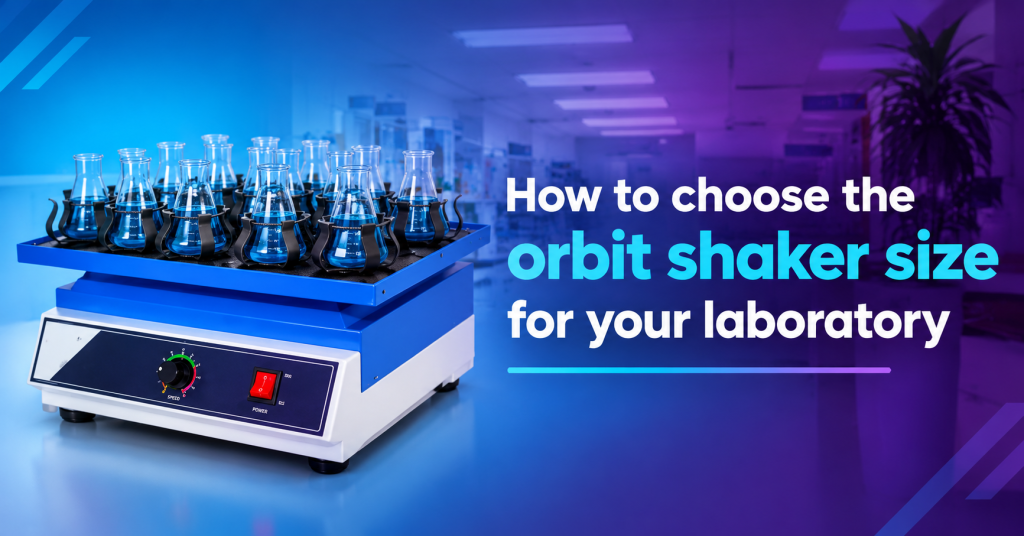
Orbit shakers are available in different platform sizes, capacities, and configurations. But what does size actually mean when choosing one for a laboratory? It depends on the containers you use, the number of samples you handle, and the space available for the equipment.
Understanding the differences between shaker sizes makes it easier to compare specifications. A laboratory equipment supplier in UAE offers orbit shakers in different sizes, making it important to understand what each size is suited for.
What Determines the Size of an Orbit Shaker
The size of an orbit shaker is generally considered by looking at its platform dimensions and sample capacity. The platform is the area where flasks, bottles, tubes, or other containers are placed.
Other specifications also affect how much a shaker can handle, including:
- Platform dimensions
- Maximum load capacity
- Orbit diameter
- Speed range
- Number and size of vessels
- Available accessories
Two shakers may have similar external dimensions but different capacities, and it is important to look at the complete specifications.
Compact Orbit Shakers
Compact orbit shakers have smaller platforms and are designed for laboratories working with relatively small sample quantities.
They may be used with:
- Microplates
- Small tubes
- Small bottles
- Small laboratory vessels
- Limited numbers of samples
Compact shakers may have different speed ranges and orbit diameters for particular laboratory applications depending on the model.
Medium Size Orbit Shakers
Medium sized orbit shakers provide a larger working platform and can accommodate more containers than compact models.
They are commonly specified for applications involving:
- Multiple flasks
- Culture vessels
- Bottles
- Beakers
- Mixed container sizes
The exact number of vessels depends on their dimensions and the platform configuration. Clamps, trays, and other attachments can also change how many containers can be placed on the platform.
Large Orbit Shakers
Large orbit shakers have larger platforms and higher load capacities. They are designed for applications where laboratories need to process a greater number or larger size of vessels at one time.
These models may accommodate:
- Several large flasks
- Larger bottles
- Multiple culture vessels
- Higher sample loads
The available bench or floor space should be checked before installation, because platform dimensions are larger.
Comparing Orbit Diameter
Size is not limited to the physical platform. Orbit diameter is another specification to consider. The orbit describes the circular distance travelled by the platform during operation. Common orbit sizes vary between models and are selected according to the vessels and application.
For example:
- Smaller orbits may be used with microplates and smaller vessels.
- Medium orbits are commonly found on general purpose laboratory shakers.
- Larger orbits can be used with larger vessels and applications requiring greater movement.
Factors that Affect Orbit Shaker Selection
Compare an orbit shaker’s specifications with the real needs of your lab rather than focusing only at the external dimensions, including the types of vessels you use, the number of samples you process, the total sample weight, the required speed range and orbit diameter, available bench space, and compatible accessories.
Different sizes exist because laboratory workflows vary. Users can compare models based on their own equipment, sample volume, and working conditions by being aware of these differences. The specifications of each orbit shaker, including platform size, capacity, orbit diameter, speed, and load, provide useful details when comparing equipment from a laboratory equipment supplier in the UAE.