Modern surgical scenarios require accuracy, speed, efficiency, and clarity. Even the smallest of issues in visibility can create a significant impact on the outcome and create challenges inside the operating room. The operating microscopes are one of the greatest advancements in the surgical specialty sector. It’s now an essential tool across most surgeries.
Healthcare facilities are now more dependent on innovative systems from well-established operating microscope suppliers to increase the level of surgical detailing, training, and improve overall workflow.
Better Visualisation and Surgical Accuracy
One of the greatest advantages and the reason why surgeons prefer an operating microscope is its ability to provide high levels of magnification and a bright view of the surgical field. This makes it easier for surgeons to clearly see fine structures that can’t be seen by the naked human eye. It also allows the following:
- Better accuracy during delicate procedures
- Improved perception of depth
- Lowered chances of errors during surgery
- Higher visibility in complex anatomical areas
This type of clarity is important, especially in fields such as neurosurgery, ophthalmology, ENT, and plastic surgery, as accuracy is non-negotiable there.
Improved Workflow Efficiency in the Operating Room
Operative microscopes directly contribute to a smoother and faster workflow during surgery, as surgeons don’t have to waste time on adjusting positions or using external assistance, as it provides better visualisations. This leads to the following:
- Faster decision-making during the surgery
- Little to no interruption to the flow of the procedure
- More efficient use of the time spent in the operating room
- Better coordination among the surgical staff
By eliminating unnecessary delays, the entire operating room becomes more organised and optimised.
Difference in Team Coordination and Communication
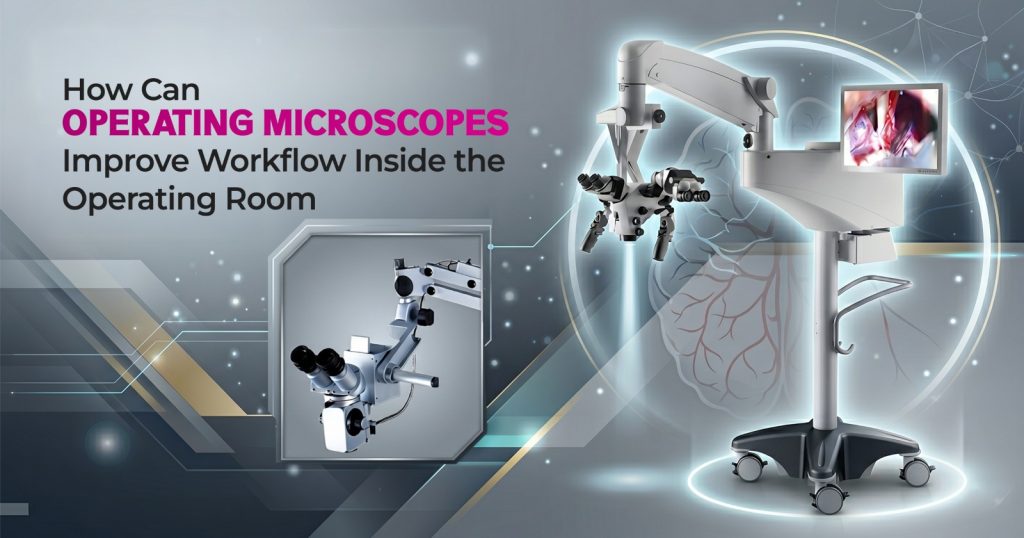
Most modern operating microscopes come with cameras and display systems integrated into them. This feature gives the entire surgical team access to observe the procedure in real time. It improves the following:
- Communication level among surgeons and their assistants
- Training and opportunities for junior staff
- Real-time collaboration during complex procedures
- Shared understanding of the whole process
As everyone will be aligned visually, teamwork becomes very simple and effective.
Ergonomic Advantages for Surgeons
Surgical procedures that last for hours will create physical strain and fatigue in surgeons. Operating microscopes help to reduce this pain by allowing adjustable viewing from different angles and stable positioning systems. The ergonomic benefits are the following:
- Reduced strain on the neck and back
- Improved posture while performing long surgeries
- Lowered physical fatigue
- Better focus and concentration
This makes sure that the surgeons can maintain a high level of performance throughout long surgical procedures without feeling tired.
Advanced Lighting and Image Stability
Lighting plays a huge role in determining the accuracy of a surgical procedure. Operating microscopes deliver consistent and shadow-free lighting of the surgical field. Some of the additional advantages are the following:
- Improved visibility of tissues
- Better contrast and depth perception
- Imaging that is stable and vibration-free
- Greater control during micro-level procedures
All these features are needed to maintain the safety and accuracy in critical or complex surgeries.
Training and Medical Education
Operating microscopes also play a huge role in education, as they are valuable tools in a medical training environment. It allows students and trainees to observe procedures in real time in a hospital to improve learning outcomes. The benefits are the following:
- Real-time observation of surgical techniques
- Better understanding of anatomy
- Improved hands-on training experience
- Faster skill development
This is important in building a more confident and skilled medical workforce.
Technological Advancements in Medicine
Today’s operating microscopes are way more advanced than ever. These systems often come with digital imaging, high-definition recording, and other connectivity options. These advantages are leading to significant transformations in how surgeries are performed, documented, and analysed.
Hospitals that are looking to upgrade their outcomes as well as capabilities must partner with experienced operating microscope suppliers to get access to high-quality and dependable equipment that allows medical excellence.