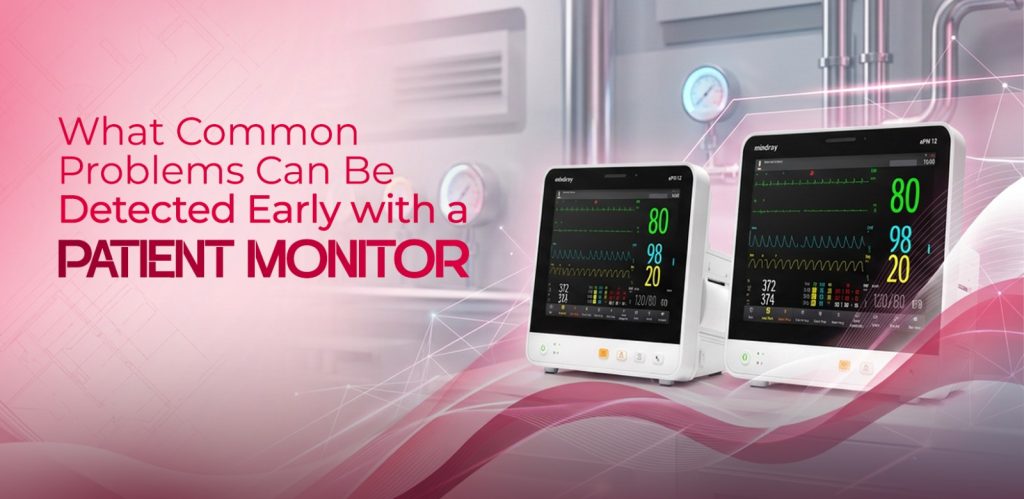
Patient monitors allow symptoms to be monitored in real time and identify patient deterioration early. This approach can enable health care workers to respond immediately before the problem escalates to serious proportions. Working with reputable patient monitor suppliers in Dubai guarantees healthcare facilities access to patient monitoring technology that is accurate, clinically tested, and trusted.
9 Common Problems That Can Be Detected Early with a Patient Monitor
- Detect Abnormal Heart Rate and Rhythm
- Identify Dangerous Changes in Blood Pressure
- Spot Early Signs of Respiratory Distress
- Catch Dangerous Fluctuations in Body Temperature
- Monitor Brain Activity and Neurological Changes
- Detect Fluid and Electrolyte Imbalances
- Identify Blood Sugar Abnormalities in Critical Patients
- Recognise Early Signs of Sepsis
- Track Post-Surgical Complications in Real Time
Detect Abnormal Heart Rate and Rhythm
One of the main functions of a hospital patient monitor is continuous ECG monitoring. A heart condition like arrhythmia, atrial fibrillation or even a rapid heartbeat (tachycardia) can be identified and assessed immediately with this device. This means that the medical experts will be able to take steps before a cardiac event happens.
Identify Dangerous Changes in Blood Pressure
A monitor machine is used to monitor a patient’s blood pressure in real-time, displaying both systolic and diastolic readings. Immediate clinical response is triggered on sudden drops or peaks in blood Pressure, Shock, Hypertension or Internal bleeding.
Spot Early Signs of Respiratory Distress
A patient monitoring system is used to continuously monitor respiratory rate and oxygen saturation (SpO2) levels. A decreasing SpO2 reading may indicate pneumonia, pulmonary embolism or airway obstruction, each of which is the ideal time to be treated, particularly when using an ICU patient monitor system.
Catch Dangerous Fluctuations in Body Temperature
Sepsis and infection or hypothermia could be suspected when there is a spike or abnormal low temperature. A hospital patient monitor continuously monitors patients’ temperatures, so that if the temperature lowers excessively, the medical staff receives an alert.
Monitor Brain Activity and Neurological Changes
Modern monitors may be equipped with advanced systems for patient safety that monitor neurological indicators like ICP or brain oxygenation. Neurological changes can be detected early in patients after surgery and trauma.
Detect Fluid and Electrolyte Imbalances
A patient monitor machine can detect dehydration, fluid overload, and electrolyte imbalance from hemodynamic monitoring. These help to find issues that can cause kidney failure and/or cardiac complications if not recognised.
Identify Blood Sugar Abnormalities in Critical Patients
Glucose levels can vary too rapidly for diabetes, and for patients who are very sick, these changes may be a life-threatening situation. Integrated patient monitoring systems help to find hyperglycemia or hypoglycemia early, guiding timely medication or dietary adjustments.
Recognise Early Signs of Sepsis
Sepsis remains one of the main causes of ICU mortality worldwide. A combination of temperature, heart rate, respiratory rate, and blood pressure readings monitored through an ICU patient monitor allows clinicians to identify sepsis indicators long before they reach a life-threatening stage.
Track Post-Surgical Complications in Real Time
After surgery, patients need more care. A hospital patient monitor continuously tracks key signs, enabling early detection of postoperative complications such as internal bleeding, infection, or organ stress, reducing recovery time and improving outcomes.
Why Choosing the Best Patient Monitor Supplier Matters?
The quality of the equipment is an important factor in the accuracy and trust of your patient monitoring system. Patient monitor vendors in Dubai that are reputable offer clinically validated patient monitors that adhere to international healthcare standards, with technical support and calibration services.
From an ICU to an emergency ward or a general care unit, the right patient monitor suppliers in Dubai make sure that your healthcare facility is ready to identify, act upon, and manage critical conditions accurately.
Take the First Step Toward Safer Patient Care
The key to good treatment is early detection. From ICU patient monitors to hospital-wide patient safety systems, a well-integrated patient monitoring system gives healthcare teams the ability to take action before things turn more serious. Don’t wait for emergencies to expose the gaps in your monitoring setup. Reach out to a patient monitor supplier in Dubai today, and provide your facility with the monitoring technology your patients deserve.